
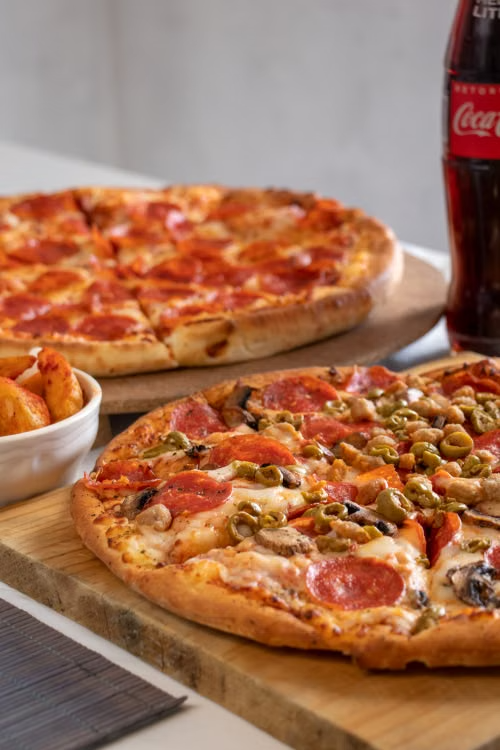
Ordering pizza for 20+ people becomes much easier when the math starts with the guest list. If you are feeding a large group of people, begin by confirming how many will actually eat. Twenty guests who plan to have dinner require a different order from twenty guests attending a casual gathering with appetizers, drinks, and dessert.
A useful starting point is to estimate three slices per adult for a standard meal. That gives 60 slices for 20 guests. If the pizzas you order provide eight slices each, 60 divided by eight equals 7.5 pizzas. Since ordering half a pizza is rarely practical, round up to eight.
Use a Simple Pizza Formula
For pizza for 20+ people, the easiest formula is:
Number of guests × estimated slices per guest ÷ slices per pizza = pizzas needed.
If your group has 24 guests and you estimate three slices each, the calculation is 24 × 3 = 72 slices. If each pizza has eight slices, 72 ÷ 8 = nine pizzas.
For four slices each, the same group would need 96 slices, which equals 12 pizzas.
Always check how many slices your chosen pizza produces because sizes and cutting styles vary. A pizza cut into smaller pieces can provide more individual portions than a pie cut into larger slices.
When you are uncertain, round upward by one pizza rather than ordering exactly to the mathematical result.

Build a Balanced Topping Mix
Quantity is only half the problem. A large gathering also needs enough variety for different tastes.
For 20 to 25 guests, a practical order might include several classic pizzas, one or two vegetarian choices, and one specialty option. Cheese and pepperoni are dependable starting points because they appeal to many guests.
For a group of 24, you could order 10 pizzas and divide them into four cheese, three pepperoni, two vegetarian, and one specialty pie. That gives guests familiar choices while leaving room for people who want something different.
If you know your group strongly prefers meat, shift one vegetarian or specialty pizza toward another meat option.
Account for Dietary Needs
Dietary requirements should be counted separately before finalizing the order. Ask whether anyone needs gluten-free food, vegetarian options, or another specific accommodation.
If two guests need gluten-free pizza, do not simply assume that one regular pizza with different toppings will solve the problem. Confirm the available crust and preparation procedures with the restaurant.
Vegetarian pizzas should also be clearly identified when they arrive. If several guests depend on those pizzas, order enough that they are not forced to compete for the final slices.
Consider the Event Schedule
The time of your gathering affects how much pizza you need. A two-hour dinner centered around food will usually require more than a one-hour meeting where pizza is only one part of the spread.
For parties beginning around normal mealtimes, use the higher end of your slice estimate. For late-evening gatherings after guests have already eaten, a lower estimate may work.
It also helps to know when guests are expected to arrive. If people come gradually, avoid putting every pizza out immediately. Keep some boxes closed until more guests arrive so the later servings remain fresh.
For office gatherings, lunch breaks are often short, so food should be ready when people sit down.

Think About Chicago-Style Cutting
Cutting style can affect both serving and quantity. A party-cut pizza delivery order can provide smaller pieces that allow guests to sample different toppings without committing to a large slice.
Square pieces can also make sharing easier at crowded tables. Someone who wants only a small portion can take one piece, while hungry guests can take several.
The number of pieces per pizza still matters, so ask about the cutting format when calculating your order. Do not assume every pizza will produce the same number of servings.
For a gathering where variety matters, smaller pieces can be especially useful because guests can try multiple toppings throughout the meal.
Add a Small Safety Margin
Large gatherings rarely follow the guest list perfectly. Someone brings a friend, an employee who declined the invitation arrives after all, or several guests simply eat more than expected.
That is why adding a modest safety margin is sensible. For 20 guests, if your calculation produces eight pizzas, ordering nine can provide useful breathing room. For 30 guests, an extra pizza can protect against a shortage without creating an enormous amount of leftover food.
The right margin depends on your menu. If you have substantial sides and desserts, you may need less extra pizza. If pizza is the entire meal, one additional pie can be worthwhile.
Time the Delivery Properly
Delivery timing deserves as much attention as quantity. Pizza should arrive close enough to mealtime that guests receive it hot and fresh, but you also need time to set up the serving area.
For a large order, consider scheduling delivery 10 to 20 minutes before guests are expected to begin eating. This gives you time to check the boxes, arrange the pizzas, put out plates and napkins, and identify special dietary orders.
Building access can also affect timing. Offices, apartment buildings, event spaces, and venues may have security desks or designated entrances. Give the delivery driver clear instructions and provide a contact who can answer the phone.

Keep the Serving Area Organized
A crowded pizza table can slow everything down. Before the food arrives, prepare plates, napkins, utensils, drinks, and condiments.
Place labels beside pizzas with different toppings. If you have vegetarian or gluten-free options, make those labels especially clear. Keep dietary pizzas separate where appropriate.
Put the most popular choices in accessible positions and keep extra boxes nearby until needed. This prevents the entire order from being opened at once and keeps the table easier to manage.
A little organization can also help you monitor consumption. If one topping is disappearing much faster than another, you will know which leftovers to prioritize.
Plan for Leftovers
Ordering slightly more than the exact mathematical requirement does not have to mean wasted food. Leftover pizza can become an easy second meal for guests, hosts, or coworkers.
If leftovers are likely, choose toppings that reheat well and avoid ordering an excessive number of highly specialized pizzas. Classic cheese, pepperoni, and vegetable combinations are often easier to share afterward.
Have storage containers or foil available before the gathering begins. Once the meal is finished, divide leftovers promptly and refrigerate them according to normal food-safety practices.
Planning for leftovers also reduces pressure during the event.
Make the Math Work for Your Party
Ordering the best pizza for large groups starts with a simple formula: estimate slices, divide by the number of slices per pizza, then adjust for appetites, sides, dietary needs, and a modest safety margin. For 20 guests, eight to ten pizzas can often provide a practical starting range, while larger groups should be calculated using the same method.
For gatherings that call for pizza catering in Chicago or party-cut pizzas, Phil’s Pizza D’Oro can help turn your numbers into an easy order. Share your guest count, preferences, and event time, then let us help make sure the pizza arrives ready for a hungry crowd. Order Now!